Handloading for Beginners
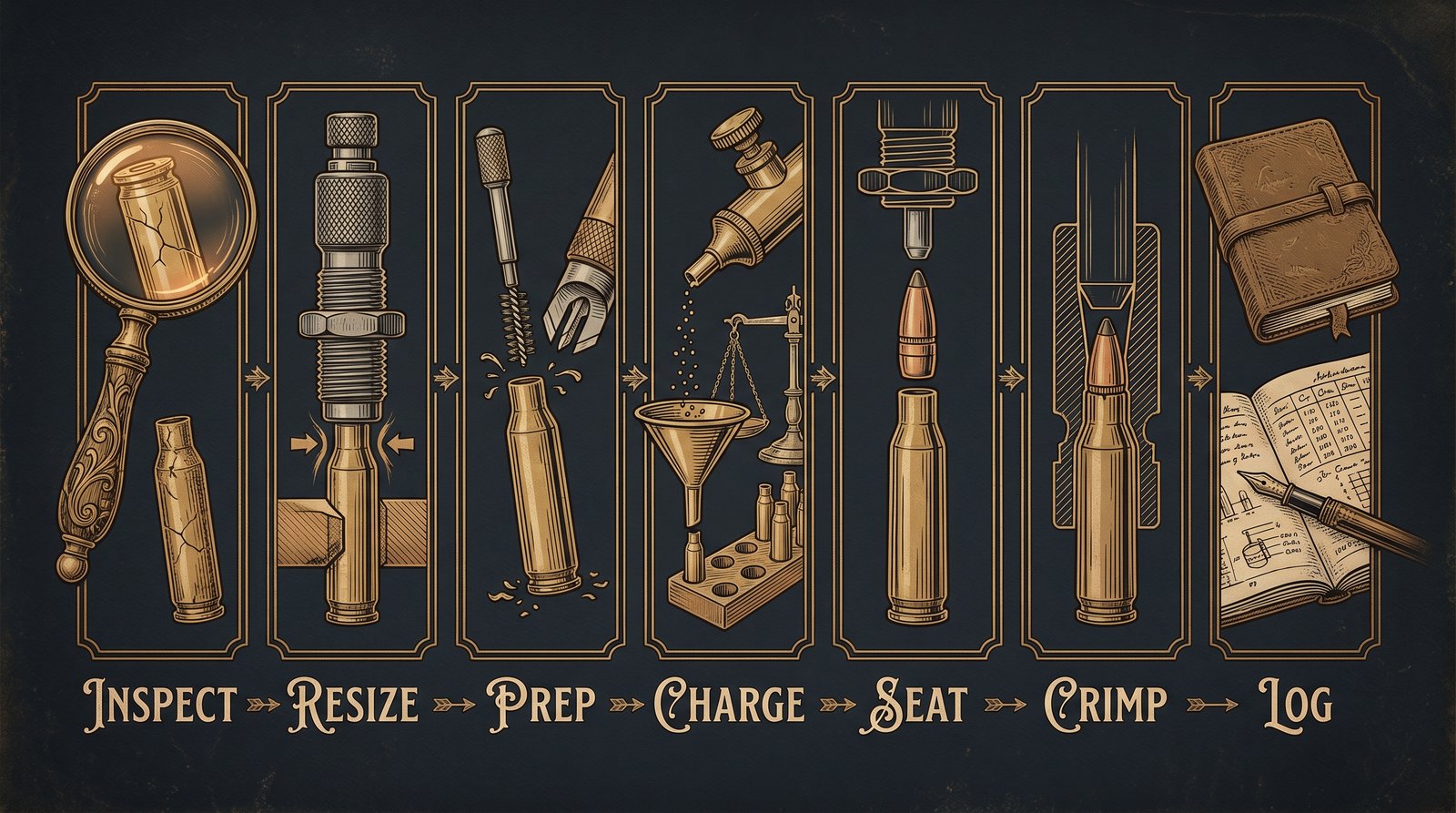
You just bought a press. Handloading is the loop where careful logging compounds. The first 200 rounds are the hardest. After that, every range trip pays back the bench time.
This page is not a reloading manual. It's the logbook habits to build from your very first load - the stuff nobody warns you about until you're three years deep with a binder full of sticky notes and a spreadsheet that doesn't match the boxes on your shelf.
Read first. Before you load a single round, work through the Bench Safety Checklist and the Handloading 101 primer. Always verify charges against a current published reloading manual.
The Five Things to Track from Day One
Most beginners track none of these. By load #200 they wish they had. Start now and your future self will buy you a beer.
1. The Recipe
Powder, charge weight, primer, brass, bullet, OAL. That's six numbers. Plus the firearm and the date: eight. Anything less and the data is a story without a punchline.
See How to document your loads for the long version.
2. The Firearm
Don't track loads by caliber alone. Your 6.5 Creedmoor on a Tikka and your buddy's 6.5 Creedmoor on a Bergara will not shoot the same recipe the same way. The cartridge is a clue; the rifle is the answer.
3. The Brass Lot
A "lot" is a batch of brass that has lived the same life - fired the same number of times, sized the same way, trimmed at the same OAL. Group your brass into lots before you start firing them, give each lot a name, and count every firing. When the case heads start growing or primer pockets get loose, you'll know which lot to retire - and which one's still good.
See Brass life: how long a case lasts.
4. The Chrono Numbers
If you have a chronograph, log every string. If you don't, save up - a $250 chrono is the single most useful purchase a beginner can make. Three numbers matter: average velocity, ES, SD. See ES vs SD for what they actually mean.
5. The Group
Five-shot groups, measured center-to-center, in MOA. Photo of the target. Date and shot count on the photo. That's the entire feedback loop of handloading in one habit. See Group size math.
The One Rule
If you don't write it down at the bench, you will not remember it correctly later.
Memory edits itself. Your spreadsheet doesn't. The point of a logbook isn't to win arguments with strangers on the internet - it's to win arguments with yourself six months from now when you swear that 41.2gr load was a tack-driver and the data says it was a 1.4 MOA group on a windy day.
Why the Spreadsheet Eventually Fails
It works for the first 50 loads. Then components change price, you switch primers, you buy a second rifle in the same caliber, and suddenly the spreadsheet has three different versions of "the truth" and nobody knows which row applies to which firearm.
Read CPR vs spreadsheet for the failure modes. Every beginner walks into them eventually. The fix isn't a smarter spreadsheet. The fix is structure.
What You Don't Need to Do Yet
- Anneal brass. Wait until lot #2 or #3.
- Sort bullets by base-to-ogive. Wait until you can shoot 0.5 MOA on demand.
- Buy a turret press. The single-stage will teach you more.
- Track ladder tests. Get 50 reps of basic loading first.