Bench Safety Checklist
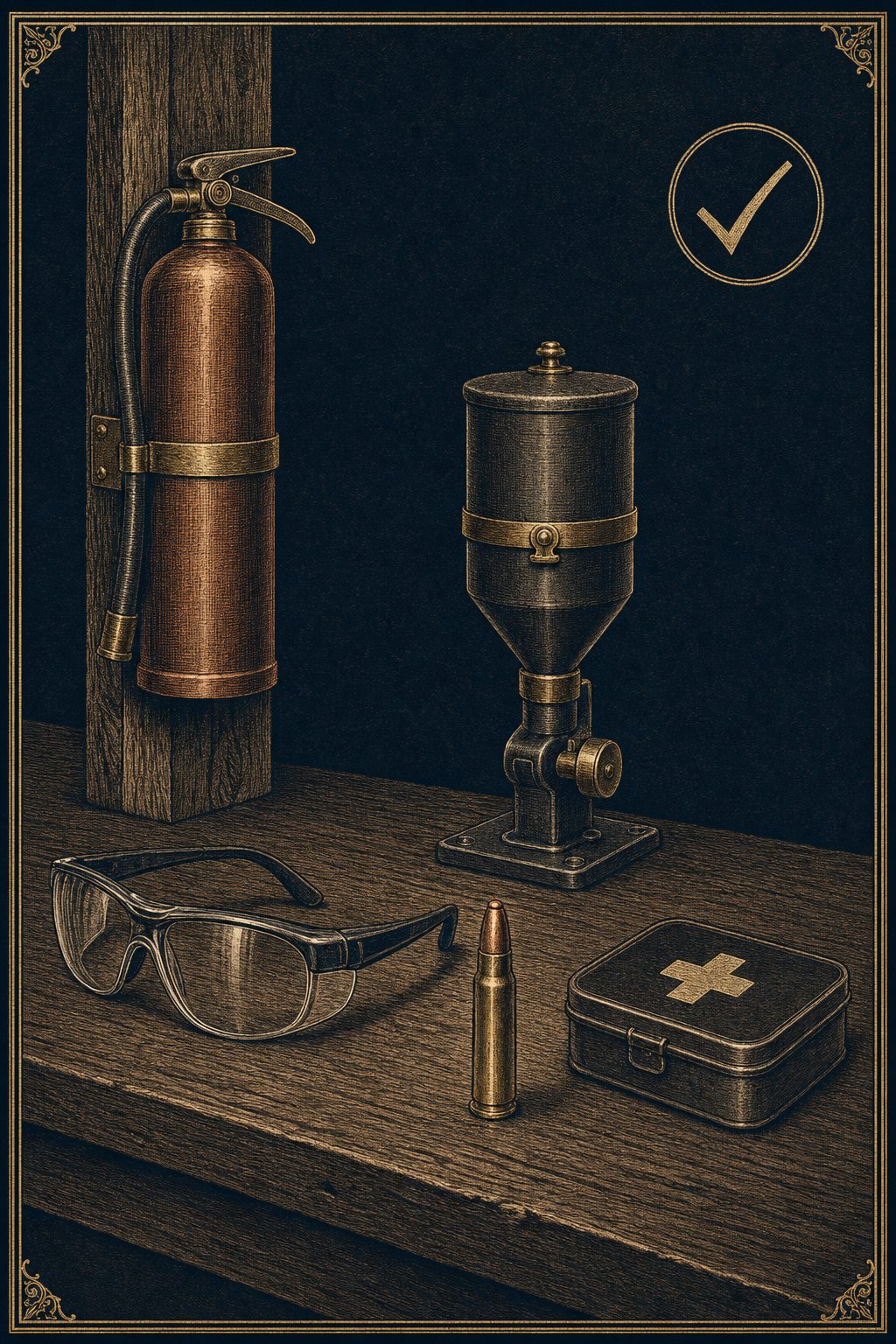
The 12 things to verify before you pull the press handle. Bullet design, group size, chrono speed - none of that matters if a charge double-feeds because you skipped step 4.
The one rule. Never load from memory or a forum post. Always verify charges against a current published manual for the exact bullet, powder, primer, and case combination. BrassTracker is your logbook. The manual is the source of truth.
Before You Start
1. Bench is clear. Single powder on the bench. No spare cans, no primers from another caliber, no other loaded ammo. One thing at a time prevents the "wait, which can did I pour from?" panic.
2. Powder hopper labeled. A piece of masking tape across the measure with the powder name written in marker beats spending two hours figuring out what you actually loaded.
3. Scale zeroed and check-weighed. Drop a calibrated check weight on every electronic scale before the first charge. If it reads off by more than the scale's stated resolution, recalibrate or use a different scale.
4. Manual is open to the right page. Not the page from a different bullet weight. Not a different powder charge range. The exact page that matches the components in your hand.
During Loading
5. Visually inspect every case for splits, head separations, or loose primer pockets before sizing. Never assume once-fired brass is good without looking.
6. Powder check every charged case. Pistol especially: a double- charge of a fast pistol powder fits under the bullet and can blow up the gun. Look down each charged case before seating a bullet.
7. Don't leave the press to take a phone call. Mid-batch distractions cause squib loads (no powder), double-charges, and primer-only rounds. If you have to stop, stop fully: uncharged cases stay in the loading block, charged cases get bullets seated.
8. One powder change requires a hopper dump and clean. Even if you think the measure is empty, pull it apart. Mixing two powders in the measure is how you get unexplained pressure spikes.
After Loading
9. OAL check on the first 5 rounds. Verify cartridge OAL is within spec. A bullet seated 0.020" deeper than intended raises pressure meaningfully on a hot load.
10. Plunk test (pistol). Drop one round into your barrel out of the gun. It should fall in freely and rotate. If it doesn't, the OAL is too long or the crimp is insufficient.
11. Mark the box. Caliber, bullet, powder, charge, primer, OAL, date, lot numbers. Copy the same data into your BrassTracker entry. They cross-reference each other when something is off six months later.
12. First range trip is at the bench, not the field. Always pressure-test new loads at a stationary bench with clean targets before you take them on a hunt or to a match.
Pressure Signs to Abort
You don't need every one of these. Any one of them at the range means stop, secure the rifle, and pull the rest of the batch.
- Flattened or cratered primer. The primer face should retain its factory radius. Pancake-flat or extruded into the firing pin hole means excessive pressure.
- Sticky bolt lift. The bolt should open with normal effort. If it takes two hands or a mallet tap, you're at or past max.
- Ejector swipe. A bright crescent on the case head where the ejector marked it during extraction means the brass was flowing on extraction. Past max.
- Loose primer pocket on the first firing. The load was way over.
- Web ring. A bright ring around the case body just forward of the rim means the case is stretching dangerously.
- Velocity that exceeds book maximum by more than a few percent. Stop and verify.
What to Do if a Load Goes Bad
- Don't fire another round through that rifle that day.
- Bag the brass separately, labeled "DO NOT REUSE."
- Pull the remaining loaded rounds with a kinetic bullet puller. Don't try to disassemble live rounds with a hammer near anything.
- Reset. Reverify your manual. Reverify your scale. Re-weigh 5 pulled rounds individually to find out whether the measure was throwing heavy or whether your technique was inconsistent.